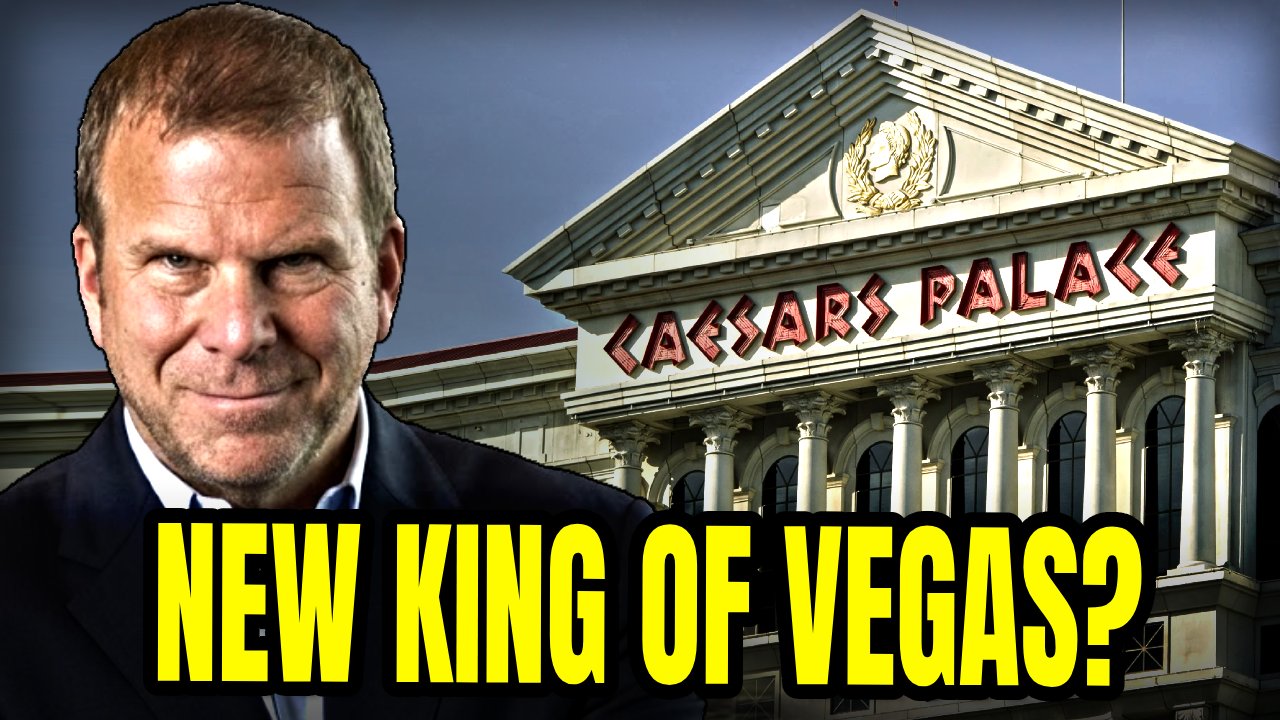
Las Vegas presents itself as a place of cash: casino floors, hotel towers, restaurants and entertainment venues built to keep money moving. Behind much of that activity sits a financial structure built on borrowed money, long-term leases and repeated refinancing.
Caesars Entertainment carries roughly $11.9 billion in debt. The company also pays substantial rent to VICI Properties, which owns much of the land and buildings used by major Strip resorts. Together, interest and rent send well over $2 billion a year to creditors and the landlord before the operator pays its dealers or housekeepers.
Truth in Accounting put the City of Las Vegas's debt burden at $379.6 million, or $1,800 per taxpayer, based on fiscal year 2019 figures. That municipal total is small beside Caesars' corporate debt and annual interest expense, although the two obligations belong to different financial systems.
The bill behind the neon
Caesars is among the most heavily indebted companies in the gaming industry. Moody's, S&P and Fitch classify its debt as non-investment grade, commonly called junk. That label describes the level of repayment risk assigned by lenders, and that risk raises the cost of borrowing.
Annual interest expense has run at about $2.3 billion in a recent year. A large portion of the money generated by resorts goes toward financing obligations before it can support new construction, employee pay or improvements.
Debt service reaches guests through several routes. Resort fees, parking charges, room prices, drink prices and reduced complimentary benefits all affect what a visitor pays. The companies describe resort fees as payment for amenities such as pools, gyms and wireless internet. The financial structure behind the resorts also creates pressure to collect more revenue from each guest.
How ownership shifted
For much of Las Vegas history, casino companies owned the properties where they operated. The modern Strip uses a different arrangement. Leveraged buyouts and mergers placed large amounts of debt on casino businesses, while sale-leaseback transactions separated the operating company from the real estate.
The 2008 buyout of Harrah's by Apollo Global Management and TPG Capital became an early example of this model. The buyers loaded billions in debt onto Harrah's. Caesars Entertainment Operating Company later went through a major Chapter 11 bankruptcy and years of debt restructuring.
Eldorado Resorts acquired Caesars in a transaction announced in June 2019 and completed in 2020. The deal was valued at about $17.3 billion to $17.6 billion, depending on how assumed debt and other obligations were counted. A large share of that figure represented obligations taken on by the buyer, so the debt remained in the system after the change in ownership.
The Strip's invisible landlord
VICI Properties owns much of the real estate used by major Strip resorts. Its portfolio includes Caesars Palace and much of the former Caesars and MGM property base. After VICI bought MGM Growth Properties for $17.2 billion, it became the largest landowner on the Strip.
Caesars pays VICI roughly $1.25 billion a year across 2 master leases. MGM Resorts pays about $860 million a year under a 25-year lease. Another estimate puts Caesars' rent to VICI at about $500 million a year.
These agreements are generally triple-net leases. The operator pays rent along with property taxes, insurance and maintenance, while the leases can run for 30 years or more. Many include increases linked to the Consumer Price Index. A mortgage can be paid down and retired. A long lease continues until it expires, is renegotiated or is affected by a restructuring.
The 2027 and 2028 test
A major concern is the timing of Caesars' debt maturities. A large share of its loans and notes comes due around 2027 and 2028, with a blended average interest rate in the mid-6% range. When those obligations mature, the company must refinance them, repay them or use other sources of cash.
Caesars redeemed $546 million of 8.125% notes due in 2027 in July 2025. That payment reduced one obligation before the maturity date, while leaving the wider refinancing schedule in place.
A large volume of corporate and commercial real estate loans comes due from 2024 through 2028, including about $1.26 trillion in loans maturing in 2027, according to one analysis. If interest rates remain high when casino debt comes due, operators may have to replace older, cheaper loans with more expensive financing.
The pressure would arrive while Strip business is already showing signs of softness. Nevada Independent figures show average daily room rates on the Strip fell 5.1%, from $203.78 in 2024 to $193.36 in 2025. MGM Resorts and Caesars each recorded 4% revenue declines at their Strip properties during the April to June period. When revenue slows, rent and interest still require payment. Operators can cut spending, sell assets, change their fee structures or seek a restructuring. Guests may also see higher prices as companies try to protect cash flow.
The timeline
- 2008Apollo Global Management and TPG Capital completed the buyout of Harrah's, placing substantial debt on the casino company.
- 2015Caesars Entertainment Operating Company went through a major Chapter 11 bankruptcy and a multiyear debt restructuring.
- June 2019Eldorado Resorts announced its acquisition of Caesars Entertainment in a transaction valued at about $17.3 billion to $17.6 billion.
- 2020The Eldorado and Caesars transaction closed, and Eldorado adopted the Caesars name.
- July 2025Caesars redeemed $546 million of 8.125% notes due in 2027.
- 2027 and 2028A large portion of Caesars' loans and notes is scheduled to mature, creating a major refinancing window.
What the video leaves out
The research also places the City of Las Vegas’s debt burden at $379.6 million, or $1,800 per taxpayer, based on fiscal year 2019 figures. That municipal total is small beside Caesars’ corporate debt and annual interest expense, although the two obligations belong to different financial systems.
Recent Strip performance data in the research show average daily room rates falling 5.1%, from $203.78 in 2024 to $193.36 in 2025. The same material says MGM Resorts and Caesars each recorded 4% revenue declines at their Strip properties during the April to June period.